Every CFO knows the number. It costs somewhere between $15 and $40 to process a single invoice, depending on the level of manual intervention, the number of exceptions, and how many approvals the workflow demands. Multiply that by thousands of invoices per month from a fragmented vendor base, and the accounts payable function quietly becomes one of the most expensive back-office operations in the enterprise.
The frustrating part is that much of this cost is driven by low-value purchases. The tail of your spend, the thousands of one-off and infrequent vendor transactions, generates a disproportionate share of your invoice volume while contributing relatively little strategic value. Processing those invoices still requires the same matching, coding, approval routing, and payment steps as a six-figure services contract.
This is the problem that procurement automation was designed to solve. And understanding how eProcurement software supports supplier invoice automation is increasingly critical for finance leaders looking to reclaim AP capacity without adding headcount.
Why Invoice Volume Is the Real Cost Driver
Most conversations about procure-to-pay automation focus on the sourcing side: streamlining supplier selection, digitizing RFx workflows, or accelerating contract execution. Those are important. But for the CFO and the AP team, the downstream invoice burden is where the pain concentrates.
Consider the typical enterprise. A mid-to-large organization might manage relationships with 5,000 or more active vendors. A significant percentage of those vendors supply infrequent, low-value goods and services: office supplies from a local vendor, a one-time repair service, a niche consulting engagement. Each of those transactions generates its own invoice, its own PO match requirement, its own coding and approval cycle.
The result is a high-volume, low-value processing queue that consumes AP resources without delivering proportional business value. Staff spend hours on three-way matching for $200 purchases. Exception handling eats up analyst time. Payment runs grow more complex. And the cost-per-invoice for these small transactions can easily exceed the margin on the purchase itself.
How eProcurement Platforms Address Invoice Processing
Modern eProcurement software tackles this problem from multiple angles. The core mechanisms are straightforward, but the cumulative impact on AP workload is significant.
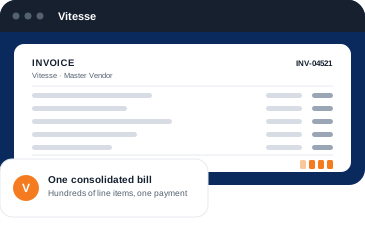
Vendor consolidation. The most direct way to reduce invoice volume is to reduce the number of vendors generating invoices. When hundreds or thousands of small suppliers are consolidated through a single channel, the math changes dramatically. Instead of processing a separate invoice from each vendor, AP receives one consolidated invoice covering all of those transactions.
Automated classification and coding. Manual GL coding is one of the most time-consuming steps in invoice processing. Procurement automation platforms that auto-classify purchases into standardized procurement categories eliminate this bottleneck. Every transaction is coded consistently, reducing exceptions and speeding approval routing.
Standardized payment workflows. When purchases flow through a single procurement channel, payment terms, tax handling, and reconciliation follow a consistent process. This removes the variability that causes exceptions, which are the single biggest driver of per-invoice processing cost.
Compliance built into the transaction. Rather than catching problems during invoice review, eProcurement platforms can vet purchases and vendors before payment occurs. This shifts compliance upstream, which means fewer invoices are flagged for manual review after the fact.
Tail Spend: Where the Invoice Problem Is Most Acute
The business case for procure-to-pay automation is strongest in the tail of your spend. This is the fragmented, high-volume, low-value segment that typically accounts for a large share of vendor relationships and invoice transactions, while representing a relatively small percentage of total spend dollars.
Tail spend invoicing has characteristics that make it uniquely expensive to process:
- High transaction count, low transaction value. The cost of processing a $150 invoice is the same as processing a $15,000 invoice, but the ROI on that processing effort is radically different.
- Diverse vendor base. Each vendor may have different payment terms, different invoicing formats, and different tax requirements, all of which increase exception rates.
- Inconsistent onboarding. Many tail-spend vendors are used once or twice and never again, meaning the onboarding investment is never amortized across repeat transactions.
- Limited visibility. Without proper classification, tail spend transactions often lack the categorization needed for accurate reporting, creating downstream audit and compliance risks.
For finance teams, this is where procurement automation delivers the fastest payback. Dramatically reducing the operational overhead of managing the bottom 2,000 vendors yields immediate, measurable returns.
Consolidating the Tail with Vitesse
This is the specific problem that Vitesse, Simfoni’s managed master-vendor service for tail spend, was built to address. Vitesse acts as a master vendor for small, fragmented purchases. Employees route their low-value purchases through Vitesse, which vets the vendor and the purchase before payment, handles supplier onboarding, and manages downstream payments, taxes, tariffs, and reconciliation across countries.
The impact on AP is measurable and immediate. Instead of processing separate invoices from thousands of small vendors, your AP team receives one consolidated invoice. Every routed purchase is auto-classified across 200+ procurement categories, giving finance real-time visibility into what was bought, from whom, and whether a preferred vendor already exists.
The confirmed results speak directly to the CFO’s priorities:
- 70% lower average invoice processing workload. This reflects the actual reduction in AP effort when tail-spend invoicing is consolidated through a single channel.
- $1.5M in average vendor management costs saved per year. The savings come from reduced onboarding, fewer payment runs, less exception handling, and simplified reconciliation.
- 30% fewer small vendors on your tail spend. Consolidation reduces vendor sprawl, which reduces the complexity that drives processing costs.
- 80% faster average supplier onboarding timeline. Most suppliers are active within 1 to 3 business days, down from 6 to 8 weeks.
Trusted by 250+ finance and procurement teams, including organizations like Sodexo, IKEA, VISA, and DocuSign, Vitesse is designed for the finance buyer who needs AP efficiency gains without a multi-year procurement transformation.
The Finance Case for Procurement Automation
The conversation around eProcurement software is shifting. For years, procurement technology was positioned primarily as a sourcing and savings tool, and it still delivers on that promise. But for CFOs and Procurement Directors evaluating where to invest next, the AP workload reduction story is equally compelling.
When you consider that processing costs for low-value invoices can exceed the value of the purchases themselves, the ROI calculation becomes simple. Reducing invoice volume by consolidating vendors, automating classification, and streamlining payment workflows frees up AP capacity for higher-value work: audit preparation, cash flow forecasting, strategic vendor negotiations.
The question is no longer whether procurement automation can reduce AP workload. It clearly can. The question is whether your organization is still absorbing thousands of hours of manual processing for purchases that should cost almost nothing to manage.
If the answer is yes, the tail is the place to start.