Procurement is still often seen as a non-strategic back-office function. This is because practitioners often focus too narrowly on measuring cost savings directly from sourcing initiatives and lose sight of how those initiatives impact core financial metrics—such as total cost of ownership (TCO), operating profit, working capital and cash flow, among others. But by adopting a well-structured, strategic spend management framework, a distinct line can be drawn from procurement to its impact on these core business metrics, showcasing how procurement is actually an important value driver for the business.
The concept of Spend Under Management (SUM) provides exactly that framework. In this three-part blog series we’ll outline the framework in greater detail, how you can get started, and what you should expect to get from it.
What is Spend Under Management?
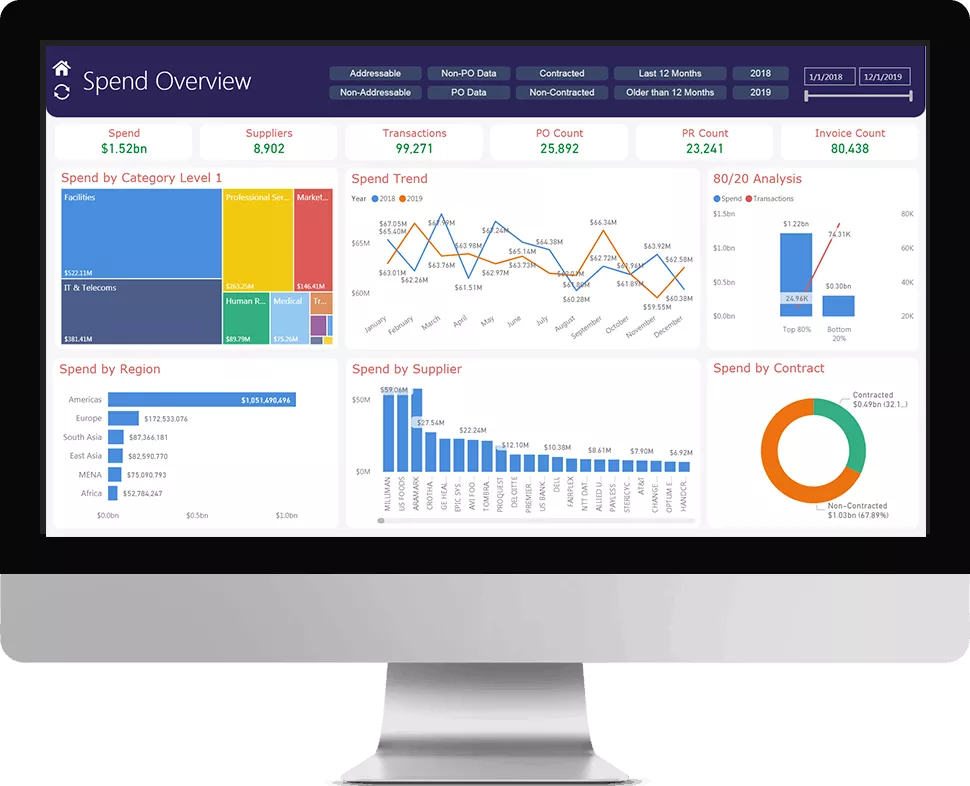
SUM is an enterprise initiative that impacts spend in each business unit, touching every category and supplier who supplies a product or service in order to achieve 85 percent or more of managed spend. Past research from analyst firms like Aberdeen identifies that companies can achieve 5 to 20 percent cost savings for each new dollar of spend brought under management. This can result in millions or even tens of millions in cost savings that can be either reinvested or dropped to the bottom line as realized savings impacting EPS (Earnings Per Share). Businesses that implement SUM can minimize costs by reducing expenditures on unnecessary or undesirable inventory, reduce supplier lead times to improve response times, reduce spending on staffing and improve service quality by optimizing on-time deliveries.
Moreover, SUM is much more than a sourcing framework. It emphasizes the use of intelligent technology, actionable data, and robust processes to meet business objectives. It also considers often overlooked non-pricing levers such as ensuring adherence to contract terms and pricing, purchase order compliance, effective demand management, and supplier performance management – where leakage most often occurs.
In the meantime, download our Comprehensive Guide To Tail Spend Management to learn more.