Procurement Vs Purchasing
Table of Contents
Procurement vs Purchasing: What’s the Difference?
Procurement vs purchasing refers to the difference between strategic sourcing activities (procurement) and the transactional process of buying goods and services (purchasing).
Simfoni.com

Procurement vs Purchasing refers to the distinction between two related but different functions within an organization’s sourcing and buying activities. While both involve acquiring goods and services, they differ in scope, strategy, and execution.
Procurement is a strategic process that includes identifying needs, sourcing suppliers, negotiating contracts, managing supplier relationships, and optimizing long-term value. It focuses on cost savings, risk management, and aligning purchasing decisions with business objectives.
Purchasing, on the other hand, is a transactional activity that involves placing orders, issuing purchase orders, receiving goods, and processing payments. It focuses on the execution of buying activities once suppliers and terms have already been defined.
Understanding the difference helps organizations balance strategic sourcing with efficient execution, enabling better cost control, supplier management, and overall procurement performance.
Overview of Procurement vs Purchasing
In the world of business, understanding the distinction between procurement and purchasing is crucial for effective management and strategy. While these terms are often used interchangeably, they represent different processes within an organization. Let’s break down both concepts.
What is Purchasing?
Purchasing refers to the specific act of buying goods or services. It involves transactional activities that include:
- Identifying Needs: Recognizing what items or services are required.
- Selecting Suppliers: Choosing vendors who can provide those items.
- Negotiating Prices: Discussing costs with suppliers to get a favorable deal.
- Placing Orders: Officially requesting the products or services needed.
- Receiving Goods/Services: Accepting delivery and ensuring quality meets expectations.
Purchasing focuses on short-term needs and transactions. Think of it as simply filling your cart at a store; you know what you want, you find it, negotiate if necessary, pay for it, and take it home.
What is Procurement?
Procurement encompasses a broader strategic approach that includes not only purchasing but also other critical functions such as:
- Strategic Planning: Understanding long-term needs based on organizational goals.
- Supplier Relationship Management: Building relationships with suppliers to ensure reliability and quality over time.
- Market Research: Analyzing market trends to make informed decisions about sourcing materials or services.
- Contract Management: Developing contracts that outline terms for ongoing supply agreements.
- Risk Management: Identifying potential risks in the supply chain and planning accordingly.
Procurement takes into account the overall strategy of acquiring goods and services efficiently while considering factors like cost-effectiveness, supplier performance, sustainability practices, etc. Imagine procurement as planning a big family meal; you need to consider not just what ingredients you’ll buy today but how they’ll fit into your meal plan over several days.
Key Differences Between Procurement and Purchasing
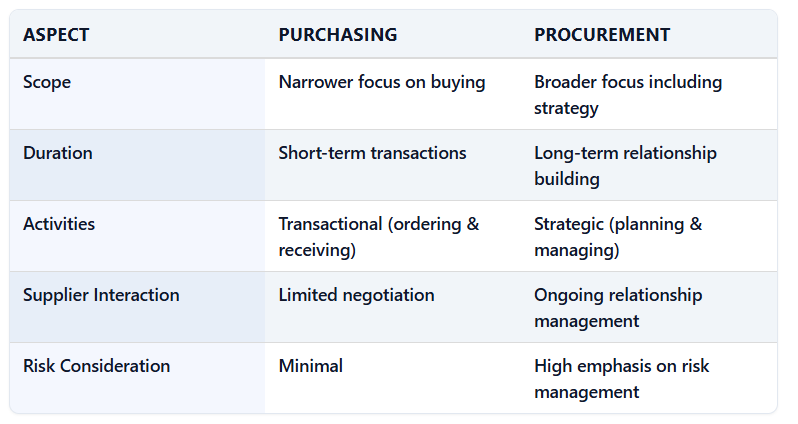
Practical Example
Imagine you’re running a small bakery:
- When you go out to buy flour from your local supplier because you’re running low – that’s purchasing.
- However, if you analyze which type of flour works best for your recipes throughout the year, build relationships with multiple suppliers for consistency in quality, negotiate bulk pricing deals based on projected sales growth over time – that’s procurement.
By understanding these distinctions clearly, businesses can optimize their operations effectively by employing appropriate strategies tailored towards immediate needs versus long-term goals.
Procurement
Procurement is a comprehensive process that involves acquiring goods, services, or works from external sources. It goes beyond merely purchasing items; it encompasses the entire lifecycle of sourcing and managing relationships with suppliers to ensure that an organization meets its operational needs effectively and efficiently.
Definition and Scope
Procurement can be defined as the strategic approach taken by organizations to acquire resources necessary for their operations. This includes not just buying products but also planning, selecting suppliers, negotiating contracts, and maintaining ongoing supplier relationships. The scope of procurement covers:
- Identifying Needs: Understanding what goods or services are required.
- Sourcing Suppliers: Finding potential vendors who can fulfill those needs.
- Contracting: Negotiating terms and conditions for supply agreements.
- Managing Relationships: Maintaining effective communication and collaboration with suppliers.
Example: A manufacturing company may need raw materials like steel. The procurement team will first assess how much steel is needed based on production schedules before sourcing reliable suppliers who offer competitive prices while ensuring quality standards.
Strategic Procurement
Strategic procurement focuses on aligning the procurement process with the organization’s overall business strategy. It emphasizes long-term partnerships rather than one-off transactions, aiming to create value through collaborative efforts with suppliers.
Key aspects include:
- Market Analysis: Evaluating market trends to identify opportunities for cost savings or innovation.
- Supplier Development: Working closely with key suppliers to improve their capabilities and reduce risks.
Example: A tech company might partner with a semiconductor manufacturer not only for immediate supply but also to collaborate on developing next-generation chips that align with future product offerings.
Procurement Process
The procurement process generally consists of several stages:
- Needs Assessment: Identifying what is required within the organization.
- Supplier Search: Researching potential suppliers in the market.
- Request for Proposal (RFP): Inviting bids from selected suppliers outlining their capabilities and costs.
- Evaluation: Analyzing proposals based on criteria such as price, quality, reliability, etc.
- Negotiation: Finalizing terms including pricing, delivery timelines, payment terms etc., after selecting a supplier.
- Order Placement: Issuing purchase orders based on negotiated agreements.
Example: A hospital looking to procure medical equipment would conduct a thorough assessment of its needs (e.g., types of machines), research available vendors (e.g., manufacturers), issue RFPs detailing specifications they require (like safety features), evaluate submissions carefully considering both cost-effectiveness and reliability before making decisions.
Supplier Relationship Management
Building strong relationships with suppliers is crucial in procurement as it leads to better service levels, improved quality control, reduced costs over time due to loyalty discounts or long-term contracts.
Important components include:
- Regular communication
- Performance reviews
- Joint problem-solving initiatives
Example: An automotive manufacturer may hold quarterly meetings with parts suppliers to discuss performance metrics such as delivery times or defect rates while collaboratively working towards solutions if issues arise.
Contract Management
Once agreements are made during procurement processes, effective contract management ensures compliance throughout the contract’s life cycle by monitoring obligations from both parties involved in order fulfillment while addressing any disputes promptly should they occur.
Example: If an IT firm secures software licenses under specific terms regarding usage limits but finds itself exceeding them due unforeseen demand spikes—contract management steps in here ensures adherence without penalties being imposed unfairly upon either party involved through clear documentation practices around usage allowances agreed upon beforehand!
Risk Management in Procurement
Risk management identifies potential risks associated directly/indirectly affecting supply chains—factors like political instability impacting supplier locations could lead shortages which necessitate contingency plans proactively established prior events unfolding unexpectedly!
Strategies often involve diversifying supplier bases across different regions so disruptions don’t entirely halt operations altogether when faced challenges arising suddenly!
Example: If a natural disaster impacts one region where critical components are sourced—the risk mitigation plan would allow alternative sources identified earlier enabling continued production despite geographical setbacks experienced elsewhere!
Sustainable Procurement
This aspect emphasizes environmentally friendly practices within all phases—from sourcing responsibly produced materials minimizing carbon footprints—to ensuring ethical labor practices upheld throughout supply chains fostering social responsibility alongside economic viability too!
Organizations increasingly adopt sustainable approaches prioritizing eco-friendly packaging options along lines reducing waste generated during transportation processes ultimately benefiting society collectively at large whilst enhancing brand reputation positively among consumers today seeking conscientious brands aligned values reflected back towards them clearly visible choices made consciously every step way forward together mutually beneficial outcomes achieved holistically!
Example: A clothing retailer might source organic cotton instead conventional methods impacting environment negatively thereby appealing customers concerned sustainability issues prevalent modern marketplace landscape evolving rapidly toward greener alternatives preferred increasingly more frequently nowadays shifting consumer preferences observed widely across industries alike globally interconnected world we live midst currently navigating complexities inherent therein daily basis continuously striving innovate adapt respond accordingly ever-changing circumstances surrounding us constantly moving forward progressively shaping futures bright ahead filled promise potential awaiting discovery exploration unlocking possibilities untapped previously overlooked opportunities abound everywhere waiting seize moments embrace challenges head-on transforming visions realities shared journeys undertaken collaboratively united purpose-driven endeavors inspiring collective action change meaningful ways possible!
In summary, understanding procurement requires recognizing its broader implications beyond mere purchasing actions—it embodies strategic thinking aimed at maximizing organizational efficiency through thoughtful decision-making establishing lasting partnerships fostering growth resilience adaptability thrive amidst uncertainties encountered journey navigating complex landscapes present day continually evolving dynamic environments challenge norms redefine success measures traditional frameworks utilized historically guiding principles underpinning foundational elements governing interactions pivotal role play shaping outcomes desired ultimately experienced firsthand tangible results witnessed fruition realized collectively aspirations fulfilled dreams pursued diligently relentlessly driven passion commitment unwavering dedication excellence pursuit consistently striving achieve greatness fulfilling potentials reached heights unimaginable transcending boundaries limitations previously thought insurmountable horizons expanded infinitely endless possibilities envisioned future awaits eager explorers adventurers daring venture forth boldly into unknown realms discovering treasures hidden depths insights gained illuminating paths illuminated wisdom gleaned experiences shared lessons learned invaluable gifts bestowed cherished forever engraved memories etched hearts minds souls intertwined woven tapestry rich diverse human experience lived fully embraced wholeheartedly profound connections forged bonds strengthened enduring legacies left behind echoing whispers generations inspire uplift encourage motivate ignite flames creativity spark imaginations light pathways illuminate dark corners hope shine brightly guide travelers embarking quests adventure embark together hand-in-hand spirits soaring high reaching new heights uncharted territories explored limitless horizons beckoning call inviting seekers wanderers discover wonders await unveiling mysteries unravel truths hidden shadows cast light illuminating beauty wonder found everywhere look see seek behold!
Purchasing
Purchasing is a critical component within the broader framework of procurement, which encompasses all activities related to acquiring goods and services for an organization. While often used interchangeably, procurement and purchasing have distinct meanings that reflect different scopes and responsibilities.
Definition and Scope
Purchasing refers specifically to the act of buying goods or services. It involves transactional processes such as selecting suppliers, placing orders, receiving items, and making payments. The focus here is primarily on the operational aspects of acquiring products needed for day-to-day business functions.
In contrast, procurement includes a wider range of strategic activities beyond just purchasing. It encompasses planning, sourcing strategies, supplier relationship management, contract negotiation, risk assessment, sustainability practices, compliance with policies, and leveraging technology to enhance efficiency.
Practical Example
Imagine a manufacturing company that needs raw materials like steel for production:
Purchasing: The purchasing department identifies a supplier who offers competitive pricing for steel. They place an order based on immediate requirements.
Procurement: The procurement team might analyze market trends to forecast future steel prices (strategic planning), evaluate multiple suppliers’ reliability (supplier relationship management), negotiate long-term contracts (contract management), assess risks associated with supply chain disruptions (risk management), and ensure that their sourcing aligns with sustainability goals by choosing eco-friendly suppliers.
Purchasing Process
The purchasing process typically involves several key steps:
- Need Identification: Recognizing what products or services are required.
- Supplier Selection: Evaluating potential suppliers based on criteria such as price, quality, delivery timeframes.
- Order Placement: Issuing purchase orders detailing specifications and quantities.
- Receiving Goods/Services: Inspecting deliveries against purchase orders to ensure accuracy.
- Payment Processing: Completing financial transactions once goods/services are received satisfactorily.
Each step plays an essential role in ensuring that purchases align with organizational needs while maintaining cost-effectiveness.
Purchase Order Management
Purchase order (PO) management is vital in controlling expenditures and tracking inventory levels effectively:
- POs serve as formal documentation between buyers and sellers outlining terms agreed upon for specific transactions.
- Efficient PO management helps prevent issues like over-ordering or stockouts by keeping accurate records of outstanding orders.
For example: If a retail store uses POs systematically when ordering clothing from various manufacturers during seasonal sales events—this ensures they maintain adequate stock without exceeding budget constraints.
Supplier Selection and Evaluation
Choosing the right supplier is crucial for successful purchasing outcomes:
- Factors include price competitiveness but also reliability in terms of quality consistency and timely delivery.
Practical Application: A restaurant may conduct taste tests from multiple food suppliers before deciding where to source its ingredients—ensuring both quality meals served at reasonable costs while establishing long-term partnerships with trusted vendors.
Cost Management in Purchasing
Effective cost management strategies can significantly impact profitability:
- Bulk Buying Discounts: Negotiating lower prices through volume purchases can lead to substantial savings.
- Total Cost Analysis: Assessing not only initial costs but also ongoing expenses related to storage or transportation helps make informed decisions about purchases over time.
For instance: A tech company might decide between two laptop models—not just comparing purchase prices—but considering warranty support costs over their lifespan too; this holistic view guides better investment choices aligning with overall financial strategy.
Inventory Management
Inventory control ensures businesses have adequate supplies without tying up excessive capital in stock:
- Techniques like Just-In-Time (JIT) help minimize holding costs by synchronizing material arrivals closely aligned with production schedules.
Example Scenario: An automotive manufacturer using JIT principles receives parts precisely timed before assembly lines need them—reducing warehouse space usage while improving cash flow efficiency through smarter resource allocation methods!
Conclusion
In summary, while purchasing focuses primarily on the transaction aspect within procurement processes—the broader implications involve strategic considerations influencing how organizations operate sustainably amidst changing market dynamics! Understanding these distinctions equips professionals better navigate complexities inherent within modern supply chains effectively driving value creation throughout their companies!
What is the definition of procurement and how does it differ from purchasing?
Definition of Procurement
Procurement refers to the entire process of acquiring goods and services for an organization. This process includes identifying needs, sourcing suppliers, negotiating contracts, purchasing, and managing the overall relationship with suppliers. It focuses on the strategic approach to obtaining resources that align with the organization’s goals.
Definition of Purchasing
Purchasing, on the other hand, is a subset of procurement. It specifically involves the act of buying goods and services. This includes activities like placing orders, receiving goods, and processing payments. Purchasing is more transactional and operational in nature.
Key Differences Between Procurement and Purchasing
Scope
- Procurement: Encompasses the entire process of acquisition, including strategy, supplier management, and contract negotiation.
- Purchasing: Focuses solely on the transaction of buying goods and services.
Focus
- Procurement: Aims to optimize costs, improve supplier relationships, and ensure quality over the long term.
- Purchasing: Concentrates on obtaining the best price for goods and services in the short term.
Activities Involved
- Procurement: Involves market research, supplier evaluation, contract management, and performance monitoring.
- Purchasing: Involves order placement, payment processing, and receipt of goods.
Strategic vs. Tactical
- Procurement: Strategic in nature, focusing on long-term business objectives and value creation.
- Purchasing: Tactical, dealing with immediate needs and day-to-day operations.
Practical Example
Imagine a company that needs to buy computers for its employees:
Procurement: The procurement team will assess the company’s needs, research different computer models, evaluate suppliers based on quality and reliability, negotiate contracts, and establish long-term relationships with selected vendors.
Purchasing: The purchasing department will take care of placing the actual order for the computers, ensuring that the order is fulfilled, and processing the payment once the computers are delivered.
By understanding these distinctions, you can better grasp the roles and responsibilities involved in acquiring resources for an organization.
Frequently Asked Questions on Procurement vs Purchasing.
1. What is the difference between procurement and purchasing?
Procurement is a strategic process focused on sourcing, supplier management, and long-term value, while purchasing is a transactional activity focused on buying goods and services.
2. What is procurement?
Procurement is the end-to-end process of sourcing goods and services, including supplier selection, contract negotiation, and supplier relationship management.
3. What is purchasing?
Purchasing is the process of ordering, receiving, and paying for goods and services based on predefined terms and suppliers.
4. Why is procurement considered strategic?
Procurement is considered strategic because it focuses on long-term value creation, cost optimization, risk management, and aligning supplier decisions with business goals.
5. Why is purchasing considered transactional?
Purchasing is transactional because it involves executing orders, processing payments, and handling routine buying activities.
6. How do procurement and purchasing work together?
Procurement sets the strategy and selects suppliers, while purchasing executes orders and ensures goods and services are delivered as required.
7. What are the benefits of separating procurement and purchasing?
Separating the two functions improves efficiency, allows procurement teams to focus on strategy, and ensures purchasing operations are streamlined.
8. Can procurement and purchasing be automated?
Yes, modern procurement platforms automate both strategic sourcing and transactional purchasing, improving efficiency and visibility.
9. What role does technology play in procurement vs purchasing?
Technology enables data-driven sourcing decisions in procurement and automates order processing and workflows in purchasing.
10. Which industries benefit from understanding procurement vs purchasing?
All industries benefit, especially manufacturing, retail, healthcare, and logistics, where efficient sourcing and purchasing are critical.
11. How does procurement impact cost savings compared to purchasing?
Procurement drives cost savings through supplier negotiation and strategic sourcing, while purchasing ensures efficient execution of those savings.
12. Is procurement part of purchasing or vice versa?
Purchasing is typically considered a subset of procurement, as it focuses on executing the buying process within the broader procurement strategy.