Procurement ensures organizations acquire goods and services efficiently, while spend management ensures organizations understand, control, and strategically direct how money is spent across the enterprise.
For many years, procurement and spend management were often used interchangeably in enterprise discussions. Both concepts relate to how organizations purchase goods and services, manage supplier relationships, and control costs.
However, as procurement responsibilities expanded and enterprise data environments evolved, the distinction between procurement and spend management has become increasingly important.
Procurement focuses on the operational processes required to acquire goods and services. Spend management represents the broader strategic discipline of understanding, governing, and optimizing enterprise spending.
In 2026, organizations that understand this distinction are better positioned to move procurement beyond transactional purchasing and toward a strategic role that supports enterprise performance.
What Is Procurement vs Spend Management?
Procurement vs spend management refers to the difference between the operational execution of purchasing activities and the strategic oversight of how organizations analyze, control, and optimize enterprise spending.
Procurement typically focuses on the processes required to source suppliers, negotiate contracts, manage purchasing workflows, and ensure goods and services are delivered to the organization. It is closely tied to supplier management, sourcing execution, and purchasing compliance.
Spend management, by contrast, focuses on understanding how money flows across the organization. It involves analyzing spending patterns, identifying sourcing opportunities, improving supplier strategies, and ensuring purchasing decisions align with broader financial and operational objectives.
While procurement ensures that purchasing activities occur efficiently, spend management ensures that enterprise spending is governed strategically and aligned with business priorities.
Why the Distinction Is Becoming More Important
As organizations grow and supplier ecosystems expand, procurement activities become more complex. Enterprises often work with hundreds or even thousands of suppliers across multiple categories, regions, and business units.
In these environments, procurement teams may execute purchasing activities successfully while still lacking a complete understanding of enterprise spending patterns.
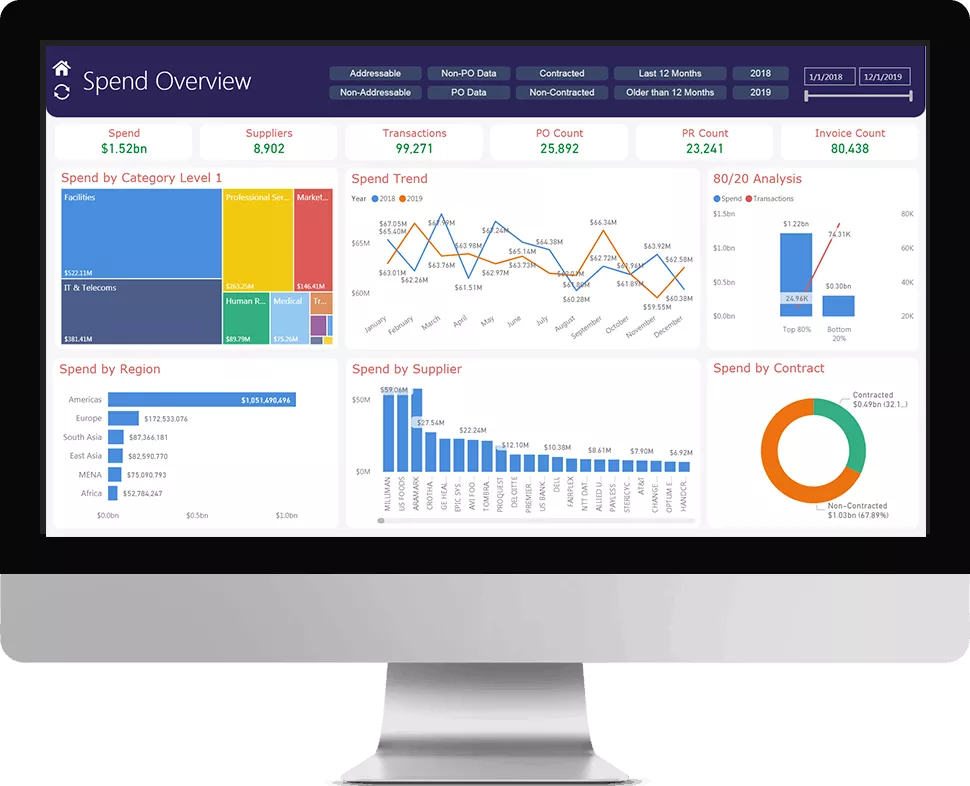
Spend management addresses this challenge by providing the analytical foundation that helps procurement leaders understand where money is spent, which suppliers dominate key categories, and where sourcing opportunities exist.
Without strong spend management capabilities, procurement teams may struggle to prioritize sourcing initiatives or measure procurement performance effectively.
The Four Layers of a Modern Source-to-Pay System
Understanding source-to-pay systems becomes easier when viewed as a layered architecture. Each layer supports a specific capability that contributes to overall procurement performance.
Visibility Layer
The visibility layer provides the foundation for procurement decision making. It focuses on organizing procurement data so that procurement teams can understand how enterprise spending is distributed across suppliers and categories.
Spend intelligence capabilities help procurement leaders identify sourcing opportunities, detect supplier concentration risks, and monitor procurement performance.
Without reliable spend visibility, procurement teams cannot prioritize sourcing initiatives effectively.
The Four Strategic Differences Between Procurement and Spend Management
Understanding the difference between procurement and spend management becomes clearer when viewed across several strategic dimensions.
Operational Focus
Procurement focuses on executing purchasing activities. These activities include supplier selection, contract negotiation, purchase order creation, and supplier relationship management.
Procurement ensures that goods and services are acquired efficiently and that purchasing processes follow established policies and supplier agreements.
Spend management focuses less on transactions and more on oversight. It helps organizations understand how procurement activities influence enterprise spending outcomes.
Data Visibility
Procurement teams typically work within operational systems that manage sourcing workflows, supplier records, and purchasing transactions.
Spend management requires broader visibility across enterprise data. This includes analyzing supplier spending patterns, identifying category-level opportunities, and understanding how procurement activities influence financial performance.
Strong spend visibility allows procurement leaders to move from reactive purchasing toward proactive sourcing strategies.
Strategic Governance
Procurement governance focuses on ensuring purchasing activities comply with company policies, supplier contracts, and regulatory requirements.
Spend management governance extends further by shaping how organizations prioritize spending decisions. It helps leaders determine which suppliers should be consolidated, which categories require strategic sourcing initiatives, and how supplier relationships influence long-term business performance.
This strategic oversight ensures that procurement activities support broader enterprise objectives.
Enterprise Impact
Procurement delivers operational value by ensuring suppliers deliver goods and services reliably and cost effectively.
Spend management influences enterprise outcomes more broadly. By analyzing spending data and identifying opportunities for improvement, spend management enables procurement teams to support cost efficiency, supplier performance, and long-term supply resilience.
This shift from operational execution to strategic oversight is one of the most significant evolutions in modern procurement.
How Modern Procurement Platforms Bring Both Disciplines Together
Historically, procurement systems focused primarily on purchasing execution. Sourcing tools, supplier management platforms, and purchasing workflows often operated independently from spend analysis environments.
Today, procurement technology is evolving toward unified platforms that connect procurement execution with spend intelligence.
For example, modern procurement environments such as Simfoni’s Strategic Spend Hub illustrate how procurement and spend management capabilities can operate within a connected architecture.
These platforms combine spend visibility, sourcing execution, and supplier engagement within a single environment. By connecting procurement operations with enterprise spending intelligence, organizations can move more efficiently from insight to sourcing action.
This integrated approach allows procurement teams to operate with greater strategic clarity.
Why Enterprises Are Expanding Toward Spend Management
Many organizations initially invest in procurement systems to manage purchasing workflows and supplier relationships. Over time, however, procurement leaders often discover that operational procurement alone cannot fully optimize enterprise spending.
Spend management capabilities allow organizations to analyze spending patterns, prioritize sourcing opportunities, and measure procurement performance more effectively.
As procurement functions mature, the focus increasingly shifts toward managing enterprise spending strategically rather than simply executing purchasing transactions.
This evolution reflects procurement’s expanding role within the organization. Procurement leaders are now expected to contribute not only to cost control but also to supply resilience, supplier innovation, and enterprise efficiency.
Understanding the relationship between procurement and spend management is essential for achieving these outcomes.
Key Takeaways
Procurement focuses on the operational processes required to source suppliers and execute purchasing activities.
Spend management focuses on analyzing, governing, and optimizing enterprise spending across suppliers and categories.
The distinction between procurement vs spend management reflects the difference between execution and strategic oversight.
Modern procurement platforms increasingly integrate procurement workflows with spend intelligence to support better decision making.
Organizations that combine procurement execution with strong spend management capabilities are better positioned to manage supplier relationships and optimize enterprise spending.
What is procurement vs spend management?
Procurement vs spend management refers to the difference between executing purchasing activities and strategically overseeing how organizations manage enterprise spending. Procurement focuses on sourcing and purchasing processes, while spend management focuses on analyzing and optimizing spending across suppliers and categories.
Why is spend management important for procurement?
Spend management provides visibility into how organizations spend money across suppliers and categories. This insight allows procurement teams to prioritize sourcing initiatives, consolidate suppliers, and improve procurement strategy.
Is spend management the same as procurement?
Spend management is not the same as procurement. Procurement focuses on executing purchasing transactions and managing suppliers. Spend management focuses on analyzing and controlling enterprise spending patterns.
How do modern procurement platforms support spend management?
Modern procurement platforms integrate spend intelligence, sourcing workflows, and supplier management capabilities within a unified environment. This allows procurement teams to move from spend insight to sourcing execution more efficiently.
Take an interactive tour of Simfoni's Strategic Spend Terminal!
Simfoni’s Strategic Spend Terminal combines Spend Analytics, eSourcing, and Pipeline Management into a single, unified platform designed to transform procurement operations.
Take an interactive tour and learn how our technology drives smarter decisions, faster results, and measurable value at every stage of the procurement process.